
Immunology

antigen

An antigen is any molecule that stimulates an immune response. Most antigens are proteins or polysaccharides, though small molecules coupled to carrier proteins (haptens) can also be antigenic. The segment of an antigenic molecule to which its cognate antibody binds is termed an epitope or antigenic determinant.

allergen : allergic reactions : antigenic determinant : autoantigenic : autoimmune disorders : class I histocompatibility molecule (MHC I) : class II histocompatibility molecule (MHC II) : immunogen : endogenous : epitope : exogenous : lipid Ag : pathogen-associated molecular pattern (PAMP) : pattern-recognition receptor (PRR) : polysaccharide Ag : T-dependent : T-independent : tolerogen : Toll-like receptor (TLR) : tumor antigens : tumor-associated antigen (TAA) : tumor-specific antigen (TSA) ▼

Antigens are classified by immune activity as immunogens, tolerogens, or allergens according to whether the molecule in question activates the immune response, is tolerated by the immune system, or elicits an allergic response, respectively. Allergic reactions are exaggerated immune responses to molecules (allergens) that would otherwise not prove harmful. Antigens may also be classified according to their source as exogenous, endogenous, autoantigenic, or tumor antigens.

Exogenous antigens are foreign molecules that are ingested (endo-, phagocytosis) by antigen presenting cells on which the fragmented and extruded antigens are then carried on class II histocompatibility molecules (MHC II) for presentation to CD4+ Th cells. Pathogen-associated molecular patterns (PAMPs ) are small molecular sequences consistently found on pathogens that are recognized by Toll-like receptors (TLRs) and other pattern-recognition receptors (PRRs). Pattern recognition receptors (PRR) are a class of innate immune response-expressed protein receptors that respond to PAMPs.

Endogenous antigens are internally generated molecules that become presented on the cell surface in the complex with class I histocompatibility molecules (MHC I). Endogenous antigens may result from exogeneous viral or bacterial infections that have altered the host cell.

In autoimmune disorders, endogenous, self-molecules induce autimmune attack by CD8+ Tc/CTLs that have escaped negative selection in the thymus.

Tumor-specific antigens (TSAs) typically result from a tumor specific mutation and are targetted for non-self attack when displayed on class I histocompatibility molecules. Tumor-associated antigens (TAAs) are more common than TSAs, and are presented both by tumor cells and by normal cells. Tumor antigens may elicit targetting by CTLs before the tumor cells can successfully proliferate and metastasize. Unfortunately, tumors employ a variety of mechanisms to evade the immune system.

Protein antigens are T dependent in that they require T cell co-operation to induce antibody responses in B cells. Non-protein antigens, such as polysaccharides and lipids can elicit T-independent antibody responses. Such T-independent antigens are typically polymeric, so it is believed that they are able to cross-link BCR-surface-Ig sufficiently strongly to activate B cells without T cell costimulation. These T-independent polymeric antigens elicit IgM antibodies and do not demonstrate affinity maturation. However, a subclass of T cells are specialized to present lipid and glycolipid antigens – γδ T cells recognize foreign nonpeptide antigens presented by CD1 proteins, which are MHC-like-molecules specialized for the presentation of lipids.

ф activation ф anergy ф antibodies ф antigen presenting cells (APCs) ф autoimmunity ф basophils ¤ cancercell-cycle control ф class-switch recombination ф clonal selection ф dendritic cells o-o endogenous vs exogenous ф eosinophils ф granulocytes ~ growth factors ф immune cytokines ф immune response ф immune tolerance ф inflammatory response ф interferons ф isotype switching ф leukocytes ф lymphocytes ф lymphokines ф lymphoid system ф macrophages ф MHC ф monocytes ф pathogens ф pattern-recognition receptors ф phagocyte ф plasma cells ¤ proliferation ф receptorsregulation of gene expression ф secondary antibody diversification ф signaling ф surface receptors ф vaccines

Tables  Fc receptors  Immune Cytokines  Immunoglobulins  Cell Adhesion Molecules  Cell signaling  Receptor Tyrosine Kinases (RTKs)  Receptor Signal Transduction  Second Messengers 

Top

tags

Labels: , , , , , , , , , ,

| 0 Guide-Glossary

evolution of immune and coagulation systems

Immune system
The innate immune system is ancient and displays roots roughly one billion years old, deep in the deuterostome branch of the bilaterians (pre-Cambrian). The lectin pathway (MBL - MASP) is homologous to the classical complement pathway, but utilizes opsonin, mannan-binding lectin (MBL, MBP) and ficolins rather than C1q. Diversified ficolins are of particular importance in invertebrates, which lack the adaptive immune response that evolved some 500 million years ago in jawed vertebrates.

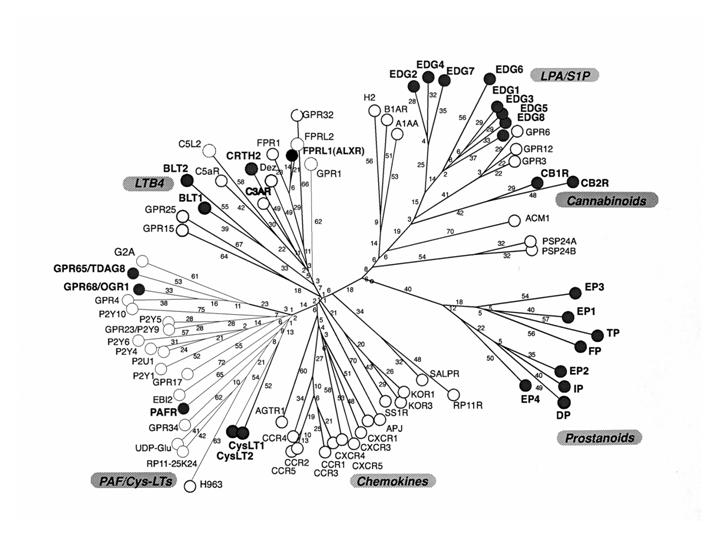
Macrophage scavenger receptors appear to mediate important, conserved functions, so it was likely pattern-recognition receptors that arose early in the evolution of host-defense mechanisms. Eicosanoids play a prominent role in inflammatory/immune responses and the evolution of eicosanoid receptors has been analyzed on the basis of amino acid sequences. Eiconasoid receptors are located on a variety of cells, tissues, and organs and can be activated by either non-selective or selective ligands.

The more specific, versatile, memory-capable adaptive immune response evolved more recently, roughly 450 million years ago, and is found in the jawed vertebrates (gnathostomes) but not in invertebrates.

Although the B cells of higher vertebrates lack phagocytic capabilities, it has recently been demonstrated that B cells from teleost (bony) fish and amphibians display potent phagocytic activities. Particle uptake by B cells induced activation of 'downstream' degradative pathways, leading to 'phagolysosome' formation and intracellular killing of ingested microbes. It is most probable that the less-elaborated, restrictive adaptive immune response of fish and amphibians makes the preservation of phagocytosis an evolutionary advantage to B cells in their defence against pathogens. These findings support the idea that B cells evolved from an ancestral phagocytic cell type, providing an evolutionary framework for understanding the close relationship between mammalian B lymphocytes and macrophages.[a, n]

Mast cell degranulation releases histamine and other vasoactive mediators in response to allergens. Although this reaction is most often encountered in allergic reactions, it apparently evolved as a defense system against intestinal parasitism, such as tapeworm infestations.

The versatile immunoglobulin superfamily is evolutionarily ancient, is widely expressed, and is constitutive or long-term up-regulated. Immunoglobulin antibodies are released by activated B cells of the immune system, on which they also act as surface marker proteins. The enormous diversity of antibodies is attributable to the alternative splicing of VDJ recombination.

RAG1 and RAG2, the proteins that mediate VDJ recombination, are closely related to transposases, and it is believed that evolution of the vertebrate genome includes their entry as part of a Transib superfamily transposon.

Blood coagulation employs the same fundamental mechanism in all vertebrates, from the early diverging jawless fishes to mammals.[1]. It has been amply demonstrated that all groups of fish generate thrombin through pathways that:
● utilize vitamin K-dependent factors
● exhibit factor XIII-dependent fibrin cross-linking, and
● manifest a fibrinolysis inhibited by the same antifibrinolytic agents as mammals (13).

(Thrombin-generated fibrin coagulation has not been observed in nonvertebrate chordates or in other invertebrate animals.)

Such a convoluted pathway as the clotting cascade could not have evolved as a single event. Proponents of "intelligent design theory" attempted to monopolize on this fact in order to promote their claims that an intelligent designer (God) must be responsible for the so-called "irreducible complexity" of the coagulation cascade. (Behe is a little more cautious in his wording, but the implied argument is as stated above.) Just as for the claims of irreducible complexity for evolution of the eye and the bacterial flagellum, the argument has been both logically and scientifically refuted.

Scientists realized some time ago that a series of gene duplications must be responsible for the complex set of interactions observed in mammalian clotting. Sequence comparisons of serine proteases led to the suggestion that the contact system of clotting factors ( factors XI and XII, and prekallikrein) must have evolved more recently than some of the other clotting factors and thus would likely be absent in lower vertebrates (4).

The genome sequences (5) for the puffer fish, Fugu rubripes, along with that for the urochordate (sea squirt) Ciona intes (6) have enabled a direct comparison of two early diverging chordates. The genomes confirm that the main lines of the vertebrate clotting pathway were evolved during the less than a hundred million years between the last common ancestor of these two creatures. It is currently believed that 50–100 million years separate the appearances of urochordates (including the sea squirt) and vertebrates. During this interval, the machinery for thrombin-catalyzed fibrin formation was presumably 'concocted by gene duplication and the shuffling about of key modular domains'.[adapted from article]

Talk Origins Evolving Immunity . Evolution of the Immune System, Spring 2005 .

Sequence comparisons of the three homologous polypeptide chains that compose vertebrate fibrinogens (acute phase proteins) imply that the molecule evolved before the divergence of vertebrates and invertebrates. Computer comparisons of various fibrinogen-related sequences indicate that the sea cucumber proteins diverged before the beta-gamma gene duplication.
Presence of a vertebrate fibrinogen-like sequence in an echinoderm. [Proc Natl Acad Sci U S A. 1990]

Coelomocytes increased expression of ferritin mRNA after stimulation. In vertebrates, cytokines can cause changes in iron levels in macrophages. Similarly, echinoderm macrokines produced decreases in iron levels in coelomocyte supernatant fluids. These results suggest that echinoderm ferritin is an acute phase protein and suggest that sequestration of iron is an ancient host defense response in animals.
Evolution of the acute phase response: iron release by echinoderm (Asterias forbesi) coelomocytes, and cloning of an echinoderm ferritin molecule.[Dev Comp Immunol. 2002 Jan;26(1):11-26.]

tags

Labels: , , , , , , , , , , , , , ,

| 0 Guide-Glossary

pattern-recognition receptors

Pattern recognition receptors (PRR) are a class of innate immune response-expressed proteins that respond to pathogen-associated molecular patterns (PAMP) and endogenous stress signals termed danger-associated molecular patterns (DAMP).

adaptive : adaptor proteins : alarmins : CARD domain : CATERPILLER : collectin : complement receptors : damage-associated molecular patterns : DAMP : helicases : innate : LGP2 : lipid transferases : Mal : Mda5 : multicellular animals : MyD88 : NALP : NLR : NOD : PAMP : pathogen-associated molecular patterns : pattern recognition receptors : pentraxin : PGR : plant R : PRR : RIG-I : RNA helicases : SARM : SARM action : TIR : TLR : TLR-1 : TLR-3 : Toll-like receptors : TRAM : TRIF

Adaptive immunity employs clonally distributed B and T lymphocytes that are coated by millions of lymphoid cell-surface receptors, which are generated by complex VDJ recombination rearrangements so as to specifically recognize an enormous variety of antigens (specificity and memory). Evolutionarily more ancient, the innate immune system relies on a much smaller number of receptors, called pattern recognition receptors (PRRs).

Multicellular animals employ pattern recognition receptors to recognize pathogen-associated molecular patterns (PAMPs) in order to detect pathogens. However, cellular stressors are another causative agent of cell and tissue damage. Cells recognize both stressors and their associated tissue damage via receptor-mediated detection of intracellular proteins ("alarmins") released by the lysed cells.

Pattern recognition receptors (PRR) are a class of innate immune response-expressed proteins that respond to pathogen-associated molecular patterns (PAMP) and endogenous stress signals termed danger-associated molecular patterns (DAMP). The evolutionarily more recent adaptive immune response employs diverse surface receptors that display decremental binding affinities for epitope stimuli.

Pattern recognition receptors (PRRs) include:
Membrane-associated PRR
_____Toll-like receptors (TLR) sense pathogen-associated or danger-associated molecular patterns extracellularly or in endosomes and receptors may link innate and adaptive immune responses (Drosophila signaling Fig).
Cytoplasmic PRR of the CATERPILLER family (also known as NACHT–leucine-rich repeat (NLR) proteins):
_____ ● Nucleotide-binding oligomerization domain proteins (NODs) recognize intracellular MDP (muramyl dipeptide) and transduce signals via NF-κB and MAP kinase pathways through the serine/threonine kinase RIP2. The nucleotide-binding oligomerization domain binds nucleotide triphosphate. NODs signal via N-terminal caspase recruitment (CARD) domains to activate downstream gene induction events.
_____ ● Pyrin domain–containing proteins (NALPs) contain contain a nucleotide binding site (NBS) for nucleotide triphosphates plus C-terminal leucine-rich repeats (LRRs), which appear to act as a regulatory domain and may be involved in the recognition of microbial pathogens. NALPs appear to recognize endogenous or microbial molecules or stress responses and to form oligomers with caspase-1, which cleave IL-1 into its active form.
_____RNA helicasesLGP2 acts as a dominant-negative inhibitor, and RIG-I and Mda5 activate antiviral signaling. These RNA Helicases recruit factors via twin N-terminal CARD domains, activate antiviral gene programs.
_____ ● plant R proteins that share structural and functional similarity with PRRs found in higher animals.
Secreted PRR
_____Complement receptors
_____Collectins
_____Pentraxin proteins, such as serum amyloid P component (SAP), acute-phase C-reactive protein (CRP), cytokine-modulated PTX3 . Pentraxins utilize calcium dependant ligand binding and display a distinctive flattened β-jellyroll structure comprising five monomers with radial symmetry that form a ring approximately 95Å across and 35Å deep.
_____Lipid transferases
_____Peptidoglycan recognition proteins (PGRs) are most critical for insect immunity, and are less well characterized in mammals.

PAMPs are small molecular sequences consistently found on pathogens that are recognized by Toll-like receptors (TLRs) and other pattern recognition receptors (PRRs). PAMPs include bacterial lipopolysaccharide "endotoxin" (LPS→TLR4), bacterial flagellin, lipoteichoic acid, lipoproteins and peptidoglycan (→TLR1,-2,-6), mannose residues, N-formylmethionine, fungal glucans, endogenous heat shock proteins, extracellular matrix molecules, and nucleic acid variants associated with viruses (vRNA→TLR3, unmethylated cytosin-guanosin dinucleotide (CpG islands)→TLR9, dsRNA) and bacteria (bacterial DNA, unmethylated cytosin-guanosin dinucleotide (CpG)→TLR9).

DAMPs – Effector cells of innate and adaptive immunity employ nonclassical pathways to secrete alarmins when they are activated by PAMPs or other alarmins. Endogenous alarmins and exogenous PAMPs therefore elicit similar responses, and can be considered subgroups of a larger set, the damage-associated molecular patterns (DAMPs).

Toll-like receptors (TLRs) appear to be one of the most ancient, conserved components of the immune system, and are the basic signaling receptors of the innate immune system. TLRs (TLR1-TLR11) show homology with the Drosophila Toll protein and the human interleukin-1 receptor family, and are transmembrane proteins that recognize extracellular or endosomal pathogen-associated molecular patterns. The TLR family is characterized by the presence of leucine-rich repeats, which mediate ligand binding, and the Toll/interleukin-1 receptor-like domain (TIR), which mediate interaction with intracellular signaling proteins. TLRs function as homo- and heterodimers with different ligand-binding specificity, and rely upon TIR co-receptors for effective ligand sensitivity. Thus, the specificity of Toll-like receptor signaling is due to adaptor proteins containing Toll–interleukin 1 receptor (TIR) domains. Five TIR adaptors display activating functions: MyD88, Mal, TRIF, TRAM, and SARM. The adaptor proteins activate intracellular molecules, including protein kinases (IRAK1, IRAK4, TBK1, and IKKi) that amplify the signal, ultimately inducting or suppressing genes that orchestrate the inflammatory response. Thousands of genes are thus activated by TLR signaling, making TLRs one of the most important gateways for gene modulation.

TLRs are activated by molecules associated with pathogens (PAMPs) or with injured host cells/tissue (DAMPs). Most identified TLR ligands are either conserved microbial products that signal the presence of an infection, or endogenous ligands resulting from other danger conditions. TLRs trigger signals evoking synthesis and secretion of cytokines and activation of host defenses through NF-κB, MAP kinases, and costimulatory molecules.

To avoid excessive inflammatory responses, TLR signalling must be tightly regulated. MAPK phosphatase 1 (MKP1) is a key negative regulator of Toll-like receptor (TLR)-induced inflammation in vivo. Phosphorylation of MAPK p38 — which is associated with the modulation of cytokine production — is considerably increased and prolonged in the absence of MKP1. [MKP1]
Table  Toll-like Receptors

Toll-like receptor-1 (TLR-1) displays homology to the receptor for interleukin-1 (IL-1) by virtue of similar cytoplasmic portions.

Toll-like receptor–3 (TLR-3) responds to double-stranded (ds) RNA, which is a viral replication intermediary for many viruses. TLR-3 activation transduces its signal into an intracellular transduction pathway, leading to activation of JNK, p38 MAPK, and NF-κB.

NF-κBs, Nuclear Factor kappa Bs, are ubiquitous transcription factors involved in responses to cellular stressors such as cytokines, bacterial antigens, and viral antigens. Free NF-κB translocates to the nucleus where it binds to specific κB sequences in DNA, initiating transcription of related genes, including those for immunoreceptors, cytokines, and its own inhibitor, IκB. Inhibitor of kappa B (IκB, IkappaBalpha) inactivates NF-κB by sequestering NF-κB dimers within the cytoplasm. Physiological activities mediated by NF-κB include cellular proliferation, and inflammatory, immune, and cellular survival responses.
[] signaling pathways []

The specificity of Toll-like receptor signaling is due to adaptor proteins containing Toll–interleukin 1 receptor (TIR) domains. Five TIR adaptors display activating functions: MyD88, Mal, TRIF, TRAM, and SARM.

SARM is a negative regulator of TRIF-dependent Toll-like receptor signaling, which blocks gene induction 'downstream' of TRIF but not of MyD88. The association fo SARM with TRIF, and the 'knockdown' of endogenous SARM expression by interfering RNA leads to enhanced TRIF-dependent cytokine and chemokine induction.[r]

adaptive ф adaptive : adaptor proteins § adaptor protein : alarmins : allograft rejection : CARD domain § CARD domains : CATERPILLER ~ cellular stress response ~ chemokine : collectin : complement receptors ф complement system ф costimulatory molecules ~ cytokines : damage-associated molecular patterns : DAMP : graft rejection ~ heat shock proteins : helicases ~ helicases : innate ф innate ф immune response ф inflammatory response : LGP2 : lipid transferases : MalMAPKsMAP kinases : Mda5 : multicellular animals : MyD88 : NALP : § NF-κB : NLR : NOD : PAMP ф pathogens : pathogen-associated molecular patterns : pattern recognition receptors : pentraxin : PGR : plant R : PRR : RIG-I : RNA helicases : SARM : SARM actionserine/threonine kinases ф signaling ф surface receptors : TIR : TLR : TLR-1 : TLR-3 : Toll-like receptors : TRAM : TRIF ф VDJ recombination ▲ф

Tables  Complement Receptors  Cytokines  Fc receptors  Immune Cytokines  Immunoglobulins  Interferons  Scavenger Receptors  Toll-like Receptors 

Top

[pdf review]

See TOLLing away in Brazil. Mitchell JA, Fitzgerald KA, Coyle A, Silverman N, Cartwright N. [Free Full Text] Nat Immunol. 2006 Jul;7(7):675-9.

Toll, A New Piece in the Puzzle of Innate Immunity. Wright SD. [Free Full Text Article] J Exp Med. 1999 Feb 15;189(4):605-9.

tags

Labels: , , , , , , ,

| 0 Guide-Glossary

. . . since 10/06/06
Google