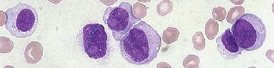



lymphokines
Lymphokines comprise that subset of cytokines produced by T lymphocytes, whereas monokines are secreted by monocytes. Modern usage employs the more general term 'cytokine'.
Lymphokines include:
● colony-stimulating factors (CSFs), including GM-CSF
● interferons (IFNs) - IFNγ
● interleukins IL-1 to IL-8, IL-10, IL-13
● macrophage inflammatory protein-1 beta (MIP-1β)
● neuroleukin (lymphokine product of lectin-stimulated T cells)[s]
● osteoclast-activating factor
● platelet-derived growth factor (PDGF)
● transforming growth factor beta (TGFβ)
● tumour necrosis factor-alpha (cachectin) (TNFα)
● tumour necrosis factor-beta (TNFβ, lymphotoxin α, LT)
Actions of lymphokines include
● activates B cells, inhibits macrophage function – IL-10
● activation of neutrophils, eosinophils, and monocyte/macrophages – GM-CSF
● bone resorption – osteoclast activating factor
● bone marrow – growth and differentiation of immune cells – IL-3
● B cell growth and differentiation – IL-4
● B cell differentiation, activates some microphages (PMN) – IL-5
● costimulator of T cells, induces growth in B cells – IL-6
● inflammation, fever, catabolism and cachexia, activation of some microphages – TNFs
● hematopoiesis stimulators – IL-3, IL-7, GM-CSF
● macrophage-activating activity (MAF) – IFN-γ
● stimulates proliferation of activated T and B cells – IL-2
● inhibits T cell growth, activates macrophages – TGFβ
tags [Immunology] [lymphokines] [cytokines] [lymphocytes] [interleukins]

Lymphokines include:
● colony-stimulating factors (CSFs), including GM-CSF
● interferons (IFNs) - IFNγ
● interleukins IL-1 to IL-8, IL-10, IL-13
● macrophage inflammatory protein-1 beta (MIP-1β)
● neuroleukin (lymphokine product of lectin-stimulated T cells)[s]
● osteoclast-activating factor
● platelet-derived growth factor (PDGF)
● transforming growth factor beta (TGFβ)
● tumour necrosis factor-alpha (cachectin) (TNFα)
● tumour necrosis factor-beta (TNFβ, lymphotoxin α, LT)
Actions of lymphokines include
● activates B cells, inhibits macrophage function – IL-10
● activation of neutrophils, eosinophils, and monocyte/macrophages – GM-CSF
● bone resorption – osteoclast activating factor
● bone marrow – growth and differentiation of immune cells – IL-3
● B cell growth and differentiation – IL-4
● B cell differentiation, activates some microphages (PMN) – IL-5
● costimulator of T cells, induces growth in B cells – IL-6
● inflammation, fever, catabolism and cachexia, activation of some microphages – TNFs
● hematopoiesis stimulators – IL-3, IL-7, GM-CSF
● macrophage-activating activity (MAF) – IFN-γ
● stimulates proliferation of activated T and B cells – IL-2
● inhibits T cell growth, activates macrophages – TGFβ
tags [Immunology] [lymphokines] [cytokines] [lymphocytes] [interleukins]
Labels: CSF, cytokines, IFN, IL, lymphokines, monocyte, T lymphocytes
| 0 Guide-Glossary